Winning Investors Over: A Modern Pitch Deck Template
Standing in front of potential investors, stakeholders, or a key client can be a nerve-wracking experience. You have roughly ten seconds to capture their attention and maybe ten minutes to secure their buy-in. The pressure is immense, and while your business model and data are critical, the vessel delivering that information matters just as much. If your presentation looks disjointed, cluttered, or amateurish, it creates a subconscious barrier of distrust before you even open your mouth. This is where visual communication becomes your strongest ally. A cohesive, modern aesthetic isn't just about looking good; it’s about signaling that you pay attention to details and take your business seriously.
The Power of Visual Consistency in Business
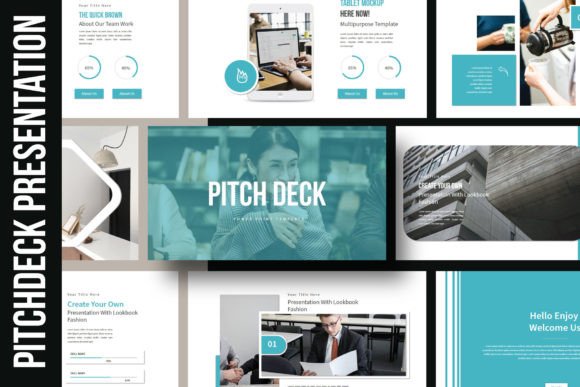
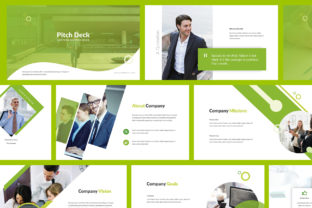
When you are building a brand, whether it is a startup seeking seed funding or an established agency pitching a new service, visual consistency is the backbone of recognition. This concept extends far beyond your logo or your website header. It applies to every single touchpoint a client or investor has with your business, including your slide decks. Many entrepreneurs make the mistake of using generic, overused templates that scream "canned content." This is where a tool like the Pitch Deck Google Slides Template changes the game. It isn't just a collection of slides; it is a system of visual communication designed to make your business presentation stand out with a pain-free, professional look.
The modern business landscape favors flat design elements. We have moved away from heavy shadows, complex gradients, and cluttered 3D charts. Today’s visual language is clean, minimalist, and direct. This particular template embraces that ethos, utilizing a flat design approach that ensures your data and your story are the heroes, not the background graphics. Because it is built with a minimalist modern aesthetic, it adapts beautifully to various industries, whether you are in tech, sustainable fashion, marketing, or logistics. The ability to easily change colors means you aren't fighting the template to match your brand guidelines; instead, the template serves your brand identity, reinforcing who you are through color psychology and layout.
Maximizing Impact with Minimalist Design
One of the biggest hurdles in presentation design is the "blank canvas" paralysis. Staring at an empty slide and trying to figure out where to place text, images, and charts is a massive time sink. The beauty of a comprehensive template system is that it handles the heavy lifting of layout and hierarchy for you. The Pitch Deck Google Slides Template comes loaded with over 30 unique, creative slides. This variety is crucial because a pitch is a narrative with distinct chapters: the problem, the solution, the market size, the business model, and the ask. Each of these chapters requires a different visual treatment.
For instance, when discussing complex data, you need layouts that support charts and infographics. When introducing your team, you need a slide that humanizes the group with photos and bios. When showing off a product, you need high-impact image placeholders. This template includes features like object placeholders and overlay picture effects, which allow you to insert images with a single click. This feature alone is a lifesaver for small business owners who may not have advanced design skills in software like Photoshop. You don't need to manually crop or mask images; the template is built to accept your content instantly.
Furthermore, the technical specifications ensure that your presentation looks crisp regardless of the screen you are projecting on. With Retina and Full HD readiness, along with a 16:9 widescreen format, your slides will look pixel-perfect. There is nothing more distracting to an investor than a blurry logo or a stretched image. By using resizable vector elements, you can scale graphics up or down without losing quality, ensuring that even the smallest icons remain sharp and professional.
Practical Applications Beyond the Boardroom
While the name suggests a specific use case, the versatility of a high-quality presentation asset extends into many areas of design and marketing. Think of this template not just as a "pitch deck," but as a comprehensive visual framework. For content creators and bloggers, these layouts can be repurposed for webinars or online course materials. The clean typography and structured layouts make complex information digestible for digital audiences.
For those involved in packaging design or product launches, the slides can serve as a visual mood board or a "lookbook" to present seasonal concepts to retail partners. If you are a creative agency, you can utilize the master slide layouts to create stunning case studies. Instead of sending a static PDF, you can share an animated presentation that walks the client through your process. The template comes fully animated, meaning transitions and element entrances are already handled. This adds a layer of professionalism and polish that static documents simply cannot match.
Consider the realm of social media graphics as well. While you wouldn't post a full deck, individual slides can often be exported as images. A well-designed "quote" slide or a "key statistic" slide can be repurposed for Instagram or LinkedIn, maintaining your brand's visual consistency across platforms. This cross-platform adaptability is a hallmark of smart design assets.
Bridging the Gap Between Design and Functionality
A common pain point in using templates is rigidity. You download a file, only to find that the text boxes are locked, the colors are hard-coded, or the fonts are obscure and expensive. This friction leads to frustration and often results in a final product that looks "off." The Pitch Deck Google Slides Template was created specifically to address these pain points. The documentation provided ensures that even a novice can navigate the file structure.
Typography plays a massive role here. The template utilizes a free font system, specifically Lato. This is a brilliant design choice. Lato is a sans-serif typeface known for its warmth and stability. It is highly legible on screens, which is essential for presentations. By using a free, widely available font, the creator ensures that you do not need to purchase expensive commercial licenses just to edit your own presentation. It also ensures that if you share the file with a colleague or a client, the fonts won't break or default to something generic like Times New Roman.
The inclusion of documentation and free updates further demonstrates the utility of this asset. In the world of software and design, platforms like Google Slides evolve. Having a template that receives updates means your investment remains valuable over time. Additionally, the support aspect cannot be overlooked. For a business owner or marketer, knowing that you have access to fast support if you hit a snag is invaluable. It removes the risk of technical difficulties derailing your preparation.
Preparing Your Narrative
The ultimate goal of downloading a tool like the Pitch Deck Google Slides Template is to buy back your time. Every minute you spend wrestling with alignment, color codes, or animation settings is a minute you aren't spending on the substance of your speech. A pitch is won or lost on the story you tell and the confidence with which you deliver it. If your visual aid is fighting against you, your confidence suffers.
By utilizing a template with layouts based on master slides, you ensure global consistency. If you decide halfway through that your header font size is too small, you change it once in the master view, and it updates across all 30+ slides instantly. This is the kind of efficiency that separates a stressful scramble from a calm, collected preparation process.
Whether you are designing a presentation for a high-stakes investor meeting, a quarterly business review, or a creative proposal, the principles remain the same: clarity, consistency, and professionalism. This template provides the canvas, but you provide the vision. It allows you to focus on what truly matters—connecting with your audience and communicating the value of your work effectively. Don't spend your energy on the mechanics of design; spend it on the art of persuasion.