Designing a Sweet Brand: The Ultimate Bakery Logo Guide
Walking past a bakery, what stops you? It’s not just the scent of fresh bread or the sight of golden croissants. It’s the logo—the visual handshake that promises warmth, quality, and a little bit of indulgence. For bakers, café owners, and entrepreneurs in the food industry, a well-crafted logo isn’t just decoration; it’s the cornerstone of your entire brand story. It needs to feel as inviting as your signature sourdough and as polished as your wedding cake designs.
Crafting a Visual Identity That Tastes as Good as It Looks
A great bakery logo does more than just display your business name. It communicates your specialty, your values, and the experience customers can expect. Are you a rustic artisan bakery focusing on organic ingredients? A chic patisserie offering French-inspired pastries? A family-run neighborhood spot? Your logo sets the tone instantly.
Visually, effective bakery logos often leverage a few key elements. They might incorporate subtle imagery like wheat stalks, rolling pins, whisks, or abstract representations of baked goods. However, the most powerful logos often let the typography do the heavy lifting. A thoughtfully chosen typeface can convey tradition with an elegant serif, modernity with a clean sans serif, or homemade charm with a friendly script or handwritten font. The goal is to create a mark that’s memorable, scalable, and versatile enough to work on everything from a storefront sign to a social media profile picture.
Beyond the Bag: Where Your Logo Lives and Works
Think of all the places your bakery’s brand appears. This is where a versatile design asset becomes invaluable. Your logo needs to perform consistently across a wide range of applications to build strong brand recognition.
- Packaging Design: This is prime real estate. Your logo on boxes, bags, tissue paper, and stickers turns every purchase into a marketing opportunity. It needs to be crisp and clear at small sizes.
- Signage & Storefront: The big sign above your door, window decals, and menu boards all require a logo that’s legible from a distance and looks professional when printed large.
- Digital Presence: Your website header, social media profile pictures (Instagram, Facebook, TikTok), and email signatures all need a logo that renders perfectly on screens. A high-resolution file ensures it looks sharp on retina displays.
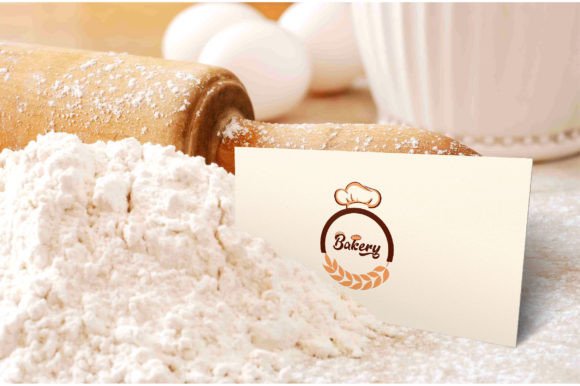
- Print Collateral: Business cards, loyalty cards, flyers, posters for special events, and even uniforms or aprons featuring an embroidered logo all benefit from a cohesive visual identity.
- Merchandise & Products: Selling branded mugs, tote bags, or cookbooks? Your logo becomes a stamp of quality on physical goods.
The Anatomy of a Flexible Design Template
For many small business owners and designers, starting with a professionally designed template is a smart, efficient move. It provides a polished foundation that can be customized to feel uniquely yours. But not all templates are created equal. What makes a bakery logo design template truly useful?
Look for these essential features that ensure versatility and professional results:
- 100% Vector Format: This is non-negotiable. A vector logo (like an .EPS or .AI file) uses mathematical paths instead of pixels. This means you can scale it from the size of a favicon to the side of a delivery van without losing a single ounce of quality. No more blurry edges.
- Multiple File Formats: A good template package should include the core vector files (.EPS, .AI) for editing, plus common raster files (.PNG with a transparent background, .JPG) for quick use in various software and online platforms.
- High Resolution (300 DPI): For any print application—business cards, brochures, packaging—you need high-resolution files. 300 DPI (dots per inch) is the standard for crisp, professional print output.
- RGB Color Mode: While print often uses CMYK, most digital design and screen display happens in RGB. Having your primary logo in RGB ensures it looks vibrant and correct on websites and social media. You can easily convert to CMYK for specific print jobs.
- Easy Customization: The template should be organized with clearly labeled layers, making it straightforward to change colors, swap out text, and adjust elements in design software like Adobe Illustrator. This empowers you to make it your own without needing advanced design skills.
- Free Font Use: Licensing can be a headache. A template that includes or specifies a free-for-commercial-use font saves you from legal worries and additional costs. Always double-check the license, but this feature is a huge time-saver.
Choosing the Right Style for Your Sweet Venture
With a template as your starting point, the real fun begins: customization. This is where you align the design with your specific brand personality. Consider the font style carefully. A bold, modern sans serif might suit a trendy urban bakery focusing on minimalist design and innovative flavors. A classic, elegant serif could be perfect for a high-end patisserie or a bakery specializing in traditional wedding cakes. A whimsical script or handwritten font adds a personal, artisanal touch, ideal for a cozy neighborhood bakery or a home-based business.
Don’t forget the power of font pairing. Often, a logo will combine two typefaces: one for the main bakery name and another for a tagline like “Est. 2024” or “Artisan Breads & Pastries.” The key is contrast and harmony. Pair a decorative display font with a simple, clean sans serif for readability. Test your combinations at various sizes to ensure the tagline doesn’t disappear when the logo is small.
Practical Tips for a Logo That Lasts
Before you finalize your design, run it through a few practical tests. Print it out. View it on your phone. Shrink it down to the size of a website favicon. Is the text still legible? Do the colors hold up? A logo that only works at one size or on one background isn’t a functional logo.
Think about color psychology. Warm tones like browns, creams, and golds evoke feelings of comfort, warmth, and natural ingredients. Pastels can suggest sweetness and delicacy. Bold, high-contrast colors might communicate energy and modernity. Choose a palette that reflects the mood of your baked goods and your customer experience.
Finally, consider the broader brand identity your logo will anchor. It should work seamlessly with the rest of your visual language—the patterns on your packaging, the style of your product photography, the tone of your social media posts. A strong, cohesive brand identity, built on a solid logo foundation, makes your bakery instantly recognizable and helps build lasting customer loyalty. It turns first-time visitors into regulars who feel a connection to your brand story, one delicious bite at a time.